
Mouse Pad Buying Guide: Read in 5 Minutes, Save Your Money
Many people buy mouse pads based solely on price or appearance. As a result, within a month or two, they run into issues like surface pilling, base hardening, edge curling, or wrist discomfort. The money spent doesn’t feel worth it, and they have to replace it within six months.
Today, let’s spend 5 minutes talking from a manufacturer’s perspective: How to really evaluate and choose a mouse pad.
Buying Tip 1: Look at the Material
Mouse pad materials mainly fall into two categories: cloth pads and glass pads.
- Cloth pads are what most people use. They are soft, quiet, and work on any desk. Whether for office work or gaming, they’re a great fit. If you’re buying your first mouse pad or don’t want to overthink it, a cloth pad is a safe choice.
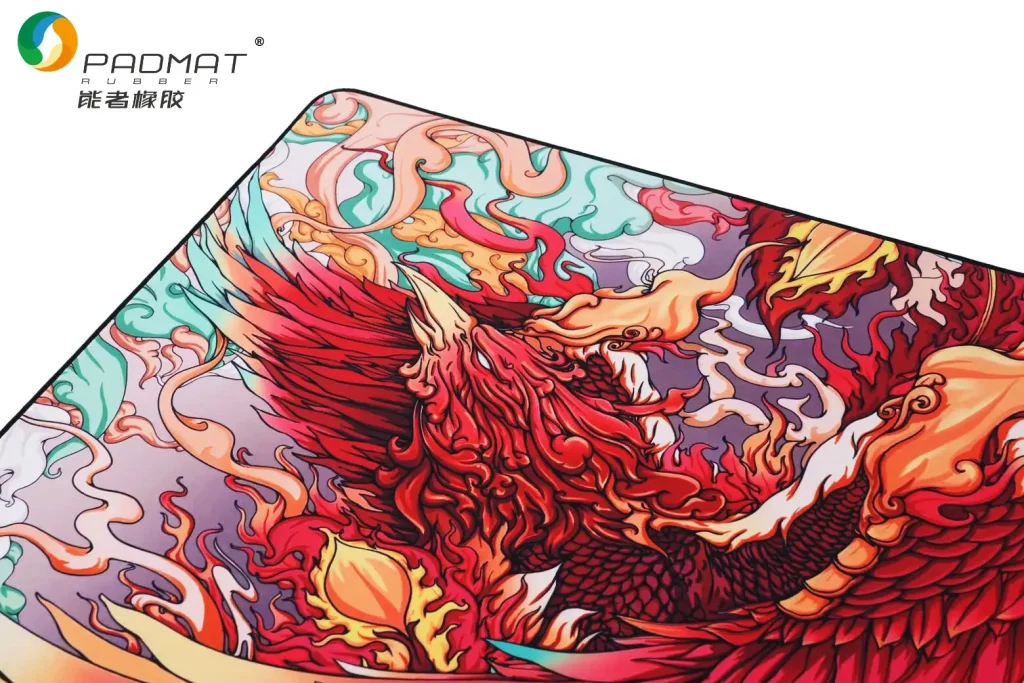
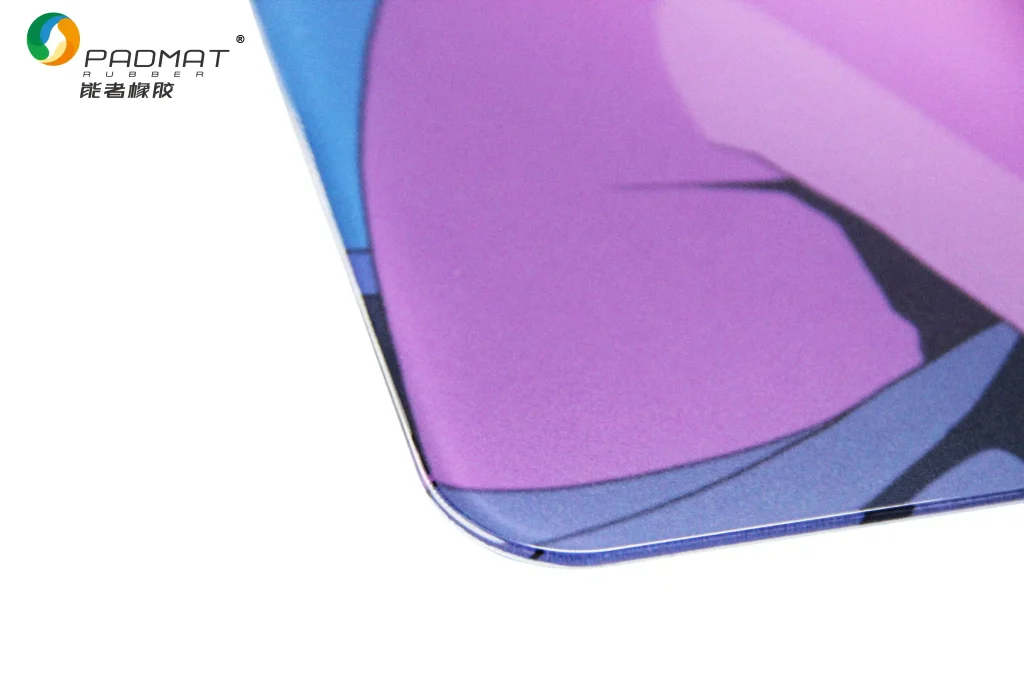
- Glass pads have become popular in the last two years, and for good reason. They are smooth and durable The surface stays like new for years, and sweat or oil wipes off in seconds. However, they are hard — your wrist may need some time to adjust — and they cost more than cloth pads.
Neither material is inherently “better” — it’s about what suits you. If you value comfort and quiet, go with cloth. If you want smoothness and durability, go with glass. We make both. Click here to see the differences.
Buying Tip 2: Look at the Thickness
Thickness directly affects wrist comfort.
2-3mm – Thin: Mouse movement feels more “grounded,” but long sessions may feel a bit hard on the wrist.
3-4mm – Standard: Most people choose this range. It balances comfort and stability and is a safe choice.
Recommendation: If you use a mouse for more than 6 hours a day, consider a thicker option around 4mm. If you’re unsure, 3-4mm is the safest bet.
Buying Tip 3: Look at the Size
Wrong size = awkward to use.
Small (approx. 250×210mm): Just enough for the mouse. Good for tight spaces or travel.
Medium (approx. 320×270mm): Works for office use, but gaming may feel cramped.
Large (approx. 450×400mm): Good for both office and gaming. Most people’s choice.
Desk pad (approx. 900×400mm): Covers both keyboard and mouse. Keeps your desk tidy. Great if you have enough desk space.
Recommendation: If your desk space allows, go large or desk pad size. The extra room feels great and you won’t regret it.
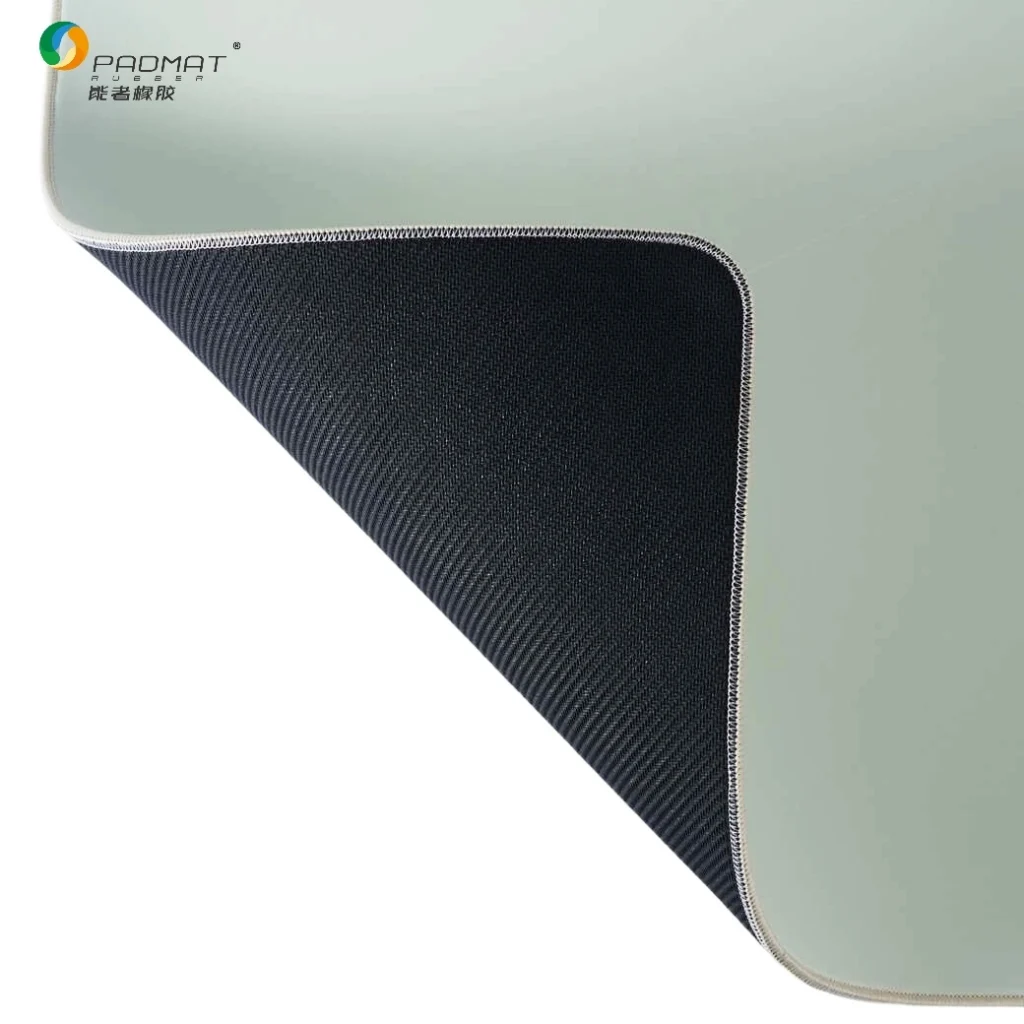
Buying Tip 4: Look at the Base
The base is the “unsung hero” of a mouse pad. Many people focus only on the surface and ignore the base — then find it slipping within months.
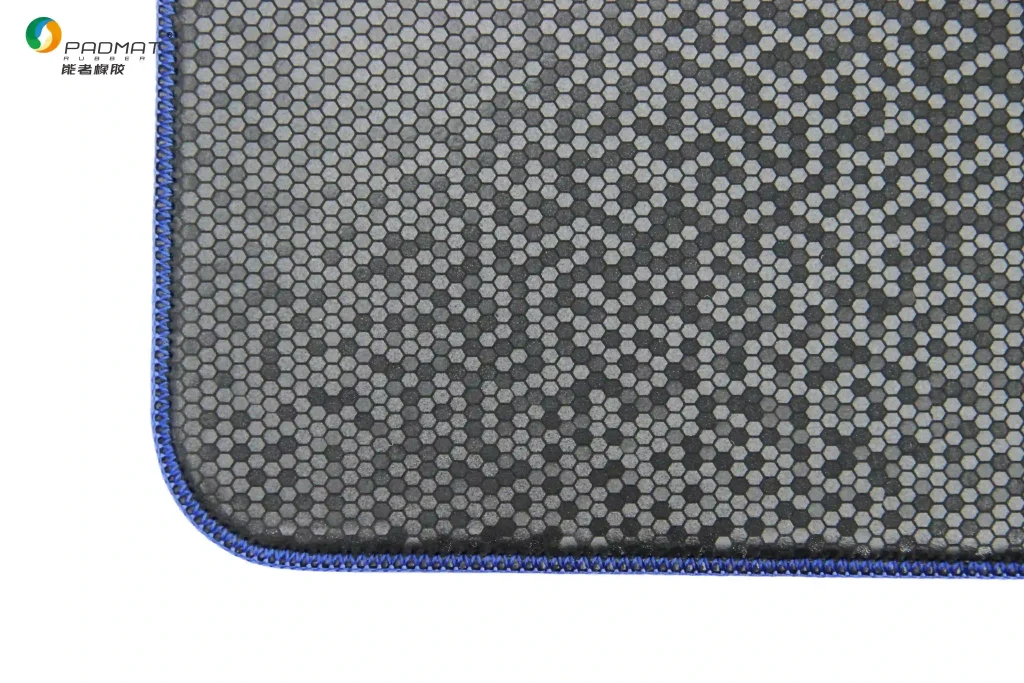
The base matters for two things: non-slip performance and whether it hardens over time.
Natural rubber: Great resilience, long-lasting grip, eco-friendly.Feels good and lasts longer.
PU/Silicone: Excellent grip, often used for glass pads. Costs more than natural rubber.
Recommendation: For cloth pads, prioritize natural rubber base. It offers great value — better feel , at a lower price than silicone. Check out our natural rubber base mouse pads.
Buying Tip 5: Look at the Edge
Edge finishing determines durability and wrist comfort.
Stitched edge: A line of stitching wraps the cloth and base together. Durable, no fraying or delamination, comfortable for your wrist. Highly recommended.
Unstitched (cut edge): Straight cut, no stitching. Cheaper, but edges tend to fray and separate over time.
Glass pads: No stitching needed, but pay attention to edge polishing. Good glass pads use 3D polishing for smooth, non-sharp edges.
Recommendation: For cloth pads, choose stitched edges. For glass pads, choose well-polished edges.
Summary
A good mouse pad doesn’t require wasting money or overthinking.
Remember these points:
-
Cloth vs. glass — depends on your needs
-
Thickness — 3-4mm is the safest choice
-
Size — go large or desk pad
-
Base — prioritize natural rubber
-
Edge — choose stitched edges
If you’re not sure which one suits you, feel free to contact us to chat about your usage habits and desk size. We’ll help you find the right fit.